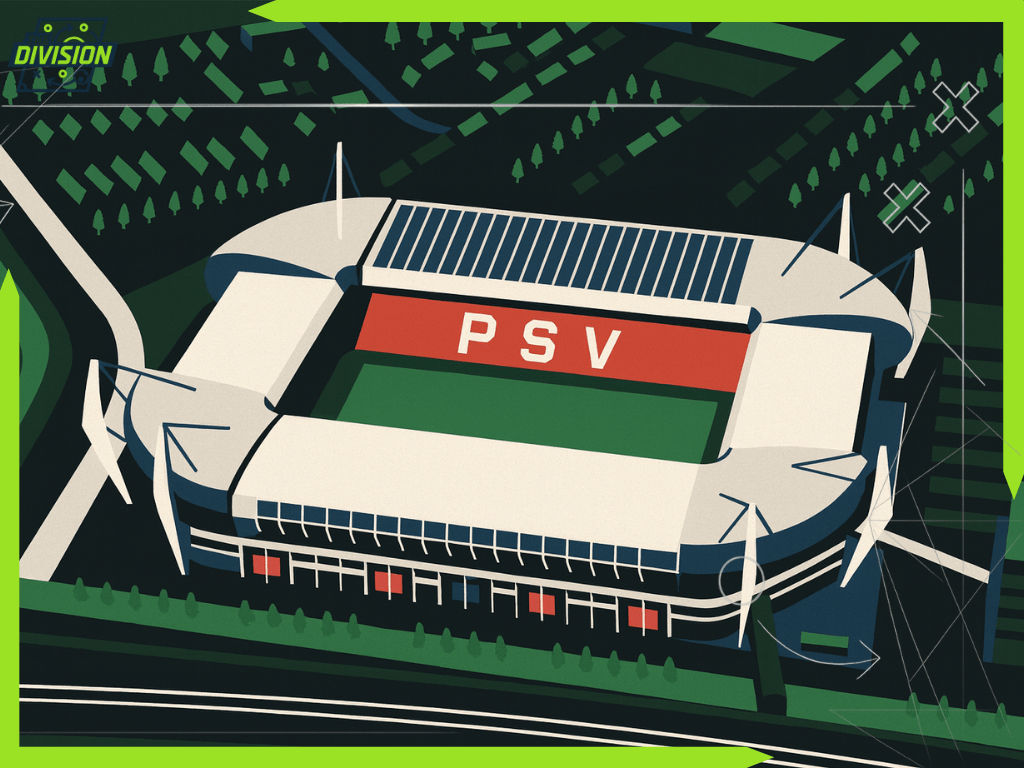
For clubs competing in the Eredivisie, European qualification isn’t merely a sporting achievement—it’s the difference between financial sustainability and struggle, between attracting quality players and losing them, between relevance and obscurity. Understanding exactly which league positions lead to which European competitions, and the treacherous pathways between them, is essential for any fan trying to make sense of late-season battles and the strategic calculations clubs make.
With the Netherlands currently ranked 6th in UEFA’s coefficient system, the Eredivisie enjoys six European spots distributed across three competitions. But those six spots come with vastly different values, different risks, and different implications for clubs’ futures. Here’s everything you need to know about how Dutch clubs qualify for European football.
The Current Allocation: Six Routes to Europe
Under the Netherlands’ 6th place ranking, European qualification breaks down as follows:
Route 1: Eredivisie Champion
Destination: Champions League league phase (direct entry)
Competition starts: September
Guaranteed revenue: €40-50 million minimum
Recent examples: Feyenoord (2023, 2024), Ajax (2022)
The ultimate prize. The Eredivisie champion walks straight into the Champions League league phase with no qualifiers, no stress, and guaranteed participation in Europe’s most prestigious competition. They begin their European campaign in mid-September with a fully prepared squad and the financial security of knowing they’ve already earned tens of millions before kicking a ball.
What it means financially:
- UEFA participation bonus: ~€15-20 million
- Eight league phase matches minimum: ~€15-20 million in performance bonuses
- Match-day revenue: €1-3 million per home match
- Commercial benefits: Enhanced sponsorships, kit deals, prize money
What it means competitively:
- Attract better players with Champions League guarantee
- Full pre-season preparation (June-August)
- Squad planning based on certain European income
- Prestige of competing against Europe’s elite
Route 2: Runner-up
Destination: Champions League league phase (direct entry)
Competition starts: September
Guaranteed revenue: €40-50 million minimum
Recent examples: PSV (2023, 2024), Feyenoord (2022)
This is where the Netherlands’ 6th place ranking shows its enormous value. In leagues ranked 7th or below (like Portugal and Belgium), the runner-up must navigate qualifying rounds in July and August. Dutch runners-up enjoy the same privilege as the champion: direct entry to the Champions League proper.
Why this matters so much:
The financial gap between direct entry and qualifying is staggering. A club that gets direct entry is guaranteed €40-50 million. A club in qualifiers might earn €5-10 million if they fail to reach the league phase, or the full amount if they succeed—but the uncertainty affects everything from transfer budgets to wage negotiations.
The battle for second place: This makes finishing second almost as important as winning the title. The gap in league position between 1st and 2nd might be 10 points, but both get the same European reward. The gap between 2nd and 3rd might be only 3 points, but the European difference is massive.
Route 3: Third Place
Destination: Champions League third qualifying round
Competition starts: Late July
Path to league phase: Must win TWO knockout rounds
Fallback option: Europa League playoff if eliminated
Recent examples: FC Twente (2024), AZ Alkmaar (2023)
This is where European dreams meet harsh reality. Third place offers a Champions League opportunity, but it’s a high-wire act with no safety net until the very end.
The qualifying gauntlet:
Stage 1 – Third Qualifying Round (late July):
- Two-leg knockout tie
- Win: Advance to playoff round
- Lose: Drop to Europa League playoff round
Stage 2 – Playoff Round (mid-August):
- Two-leg knockout tie
- Win: Reach Champions League league phase
- Lose: Drop to Europa League playoff round
The challenges:
Timing: Qualifiers begin just 3-4 weeks after the Eredivisie season ends. Pre-season is compressed to 2-3 weeks, far less than the 6-8 weeks that direct entrants enjoy.
Squad building: The transfer window is still open, meaning your squad isn’t complete. Key targets might not be signed yet. Integration time for new players is minimal.
Physical readiness: Players need rest after a 34-game season, but they must be match-fit for competitive knockout ties in late July. Balancing recovery and preparation is brutally difficult.
No margin for error: One bad match over two legs, and your Champions League dreams are over. Home advantage is critical—winning both legs is ideal, but at minimum you must win at home.
FC Twente 2024 example: FC Twente qualified for Champions League third qualifying round as 3rd-place finishers. They were eliminated, demonstrating how difficult this route is even for quality clubs. They dropped to Europa League but didn’t advance far there either, showing how qualifying failures can demoralize entire campaigns.
Route 4: KNVB Cup Winner
Destination: Europa League league phase (direct entry)
Competition starts: September
Guaranteed revenue: €10-15 million minimum
Recent examples: PSV (2023, 2024 – but took CL spot via league)
The domestic cup provides a guaranteed route to European football, making the KNVB Cup meaningful even for clubs that won’t challenge for the league title. The cup winner gets direct entry to the Europa League league phase—no qualifiers required.
The complication: Cup winner already qualified
Frequently, the cup winner is Ajax, PSV, or Feyenoord—clubs that have already qualified for the Champions League via their league position. When this happens, the direct Europa League berth passes to the next-highest league finisher not already qualified for Europe.
2024 example: PSV won the KNVB Cup and finished 2nd in the league. They took their Champions League spot via league position. Their cup-related Europa League berth was transferred to 4th-place AZ Alkmaar, who thus entered the Europa League directly in the league phase.
Strategic value for mid-table clubs: For clubs like Utrecht, Heerenveen, or Sparta Rotterdam, the cup offers a realistic path to guaranteed European football. Winning 5-6 cup matches might be more achievable than finishing 4th in a 34-game league campaign.
Route 5: Fourth Place (when cup winner qualifies via league)
Destination: Europa League league phase (direct entry)
Competition starts: September
Guaranteed revenue: €10-15 million minimum
Recent examples: AZ Alkmaar (2024)
This inherited spot is transformational for clubs outside the traditional big three. Finishing fourth becomes massively valuable when it means guaranteed Europa League football rather than qualifying rounds or no Europe at all.
AZ Alkmaar 2024 example: AZ finished 4th, and because PSV won the cup but took Champions League via league position, AZ inherited the direct Europa League entry. This meant guaranteed revenue, no July stress, and full pre-season preparation for European football. For a club of AZ’s size, this was season-defining.
The uncertainty factor: Clubs can’t know in March or April whether 4th place will mean direct Europa League or qualifying rounds—it depends on cup results. This creates strategic complexity: should you prioritize league matches to secure 4th, or rest players for cup semi-finals?
Route 6: Fifth Place
Destination: Europa League second qualifying round
Competition starts: Mid-July
Path to league phase: Must win THREE knockout rounds
Recent examples: Ajax (2024), Utrecht (2023)
Fifth place faces a daunting three-round qualifier gauntlet that begins in mid-July, even before most pre-seasons are complete.
The three-round challenge:
Round 1 – Second Qualifying (mid-July):
- Two-leg knockout
- Win: Advance to third qualifying round
- Lose: Eliminated from all European competition
Round 2 – Third Qualifying (late July):
- Two-leg knockout
- Win: Advance to playoff round
- Lose: Eliminated from all European competition
Round 3 – Playoff (mid-August):
- Two-leg knockout
- Win: Reach Europa League league phase
- Lose: Eliminated from all European competition
The brutal reality: To reach the Europa League proper, the 5th-place team must win six matches (three home-and-away ties) starting in mid-July. Fail at any stage, and you’re out entirely—no Conference League fallback, no second chances.
Ajax 2024 example: Ajax finished 5th and successfully navigated all three qualifying rounds to reach the Europa League league phase. However, they failed to advance from the group stage, meaning their summer qualifying success ultimately yielded limited returns. This demonstrates that even successful qualification doesn’t guarantee European impact.
Why clubs fear this route: The combination of early start date, three must-win rounds, and complete elimination risk makes 5th place treacherous. Clubs would often prefer 4th (if it means direct Europa League) or even to win the playoff for Conference League rather than face this gauntlet.
Route 7: European Playoff (6th-9th Place)
Destination: Playoff for Conference League second qualifying round
Competition starts: May (playoff), then July (Conference League qualifying)
Format: Four-team knockout tournament
Winner’s prize: Conference League qualifying entry
Recent examples: Go Ahead Eagles (2024 playoff winners, finished 9th)
The Eredivisie’s European playoff is a uniquely Dutch solution that keeps mid-table races meaningful until the final day of the season.
How the playoff works:
Participants: Typically teams finishing 6th through 9th, though exact positions depend on how cup results affect the overall European allocation.
Format:
- Four teams seeded by league finish
- Semi-finals (single-leg, played at higher seed’s stadium)
- Final (single-leg, played at higher seed’s stadium)
- Winner earns Conference League second qualifying round entry
Seeding advantage: Higher-placed teams play at home, creating enormous advantage. The 6th-place team hosts their semi-final and (if they win) the final. Home advantage in knockout football is massive—crowd support, familiar pitch, no travel fatigue.
Timeline: The playoff occurs immediately after the regular season ends, typically in May. This gives clubs just days to prepare after completing their league campaigns.
Go Ahead Eagles 2024 example: Go Ahead Eagles finished 9th in the regular season—normally a mediocre outcome. But they won both playoff matches (semi-final and final) to claim the Conference League qualifying spot. Suddenly they had European football to sell to prospective signings and sponsors, transforming their summer.
However, Go Ahead Eagles then fell in Conference League second qualifying round, demonstrating that even winning the playoff doesn’t guarantee reaching the league phase. The playoff winner still faces a difficult qualification path.
Strategic considerations:
For 6th-place teams: You’ve secured a playoff spot with home advantage. Do you rest key players in the final league matches to be fresh for the playoff? Or do you push for 5th place to attempt Europa League qualifying (which could be worse than Conference League)?
For 9th-place teams: You’re in the playoff despite a mediocre season. Two good matches and you’re in Europe. The playoff creates hope where none would otherwise exist.
Volatility factor: A team that finished 6th and expected European football can lose to a 9th-place team on one bad night. This randomness is compelling television but frustrating for clubs that invested all season in securing European qualification.
What Happens to 10th Place and Below
Clubs finishing 10th or lower receive no European football. For mid-table clubs, this is why late-season collapses are so devastating. A club sitting 8th in March envisions the European playoff; finish 11th instead, and you’ve got nothing.
The cutoff at 9th (or 10th, depending on scenarios) creates a clear dividing line in the Eredivisie: European hopefuls versus the rest. This affects everything from January transfer activity to fan engagement in the season’s final months.
The Importance of European Performance: Individual vs Collective
European qualification is just the beginning. What clubs do once they’re in Europe affects not just their own futures but every Eredivisie club’s prospects for years to come.
The Coefficient Contribution
Every match a Dutch club plays in Europe generates coefficient points for the Netherlands:
- 2 points for a win, 1 for a draw (league phase/knockouts)
- 1 point for a win, 0.5 for a draw (qualifying rounds)
- Plus bonuses for reaching league phases and advancing through knockouts
These points are averaged across all Dutch participants and added to the five-year coefficient total that determines future allocations.
The collective pressure:
When Ajax loses a Europa League match, they’re not just damaging their own European campaign—they’re costing the entire Dutch football ecosystem points that might determine whether the Netherlands maintains 6th place or drops to 7th in two years.
When Go Ahead Eagles falls in Conference League qualifying without reaching the league phase, they’ve denied the Netherlands dozens of potential points from eight league phase matches they won’t play.
Recent examples:
Positive: Feyenoord’s 2022 Conference League final run contributed approximately 4-5 points to the national coefficient—roughly half of what all Dutch clubs earned that entire season.
Negative: Ajax’s 2023-24 early Europa League elimination cost the Netherlands valuable points at a time when Portugal was scoring heavily, narrowing the coefficient gap.
The Financial Virtuous/Vicious Cycle
Virtuous cycle (successful clubs):
- Qualify for Champions League
- Earn €40-50 million in revenue
- Invest in better players and facilities
- Improve domestic performance
- Qualify for Champions League again
- Go deeper in Europe next time
- Earn even more revenue
Ajax’s 2019 Champions League semi-final run generated funds that helped them dominate domestically for several seasons afterward. The revenue funded squad improvements that led to more European success.
Vicious cycle (struggling clubs):
- Fail in European qualifying
- Miss out on €10-20 million expected revenue
- Must sell key players to balance budget
- Weakened squad struggles domestically
- Finish lower in league, harder European path next season
- Fail in qualifiers again
- Financial problems compound
Clubs that repeatedly fail in July/August qualifiers often find themselves trapped in this cycle, unable to invest because they can’t rely on European revenue, which means they can’t build squads capable of succeeding in qualifiers.
The Collective Effort Manifestation
The coefficient’s collective nature has created unprecedented cooperation among Eredivisie clubs:
Fixture rescheduling: The KNVB and Eredivisie adjust domestic schedules to give European participants extra rest before important matches. A club playing Champions League on Wednesday might have their weekend league match moved from Saturday to Sunday or even Monday.
Strong lineups: Clubs have agreed to field competitive teams even in domestic matches that might be “meaningless” for them, ensuring European participants face proper competition that keeps them sharp.
Public support: Club directors publicly support rivals’ European campaigns, acknowledging collective interest. Feyenoord fans might grudgingly admit they need Ajax to win in Europe because Ajax’s coefficient points help secure Feyenoord’s direct Champions League entry in future seasons.
The €80 million reminder: Jan de Jong’s estimate that dropping from 6th to 7th would cost Dutch football €80 million annually has focused minds. This isn’t abstract—it’s the actual revenue difference from losing one European spot and one direct Champions League entry. Every club understands what’s at stake.
Conference League: The Democratic Path to European Glory
The Conference League’s introduction in 2021 has been transformative for mid-sized Eredivisie clubs. Before its creation, clubs outside the traditional elite had limited realistic paths to meaningful European football.
Why the Conference League Matters
Accessibility: The competition level is lower than Champions League or Europa League—clubs from smaller nations, domestic cup winners from mid-ranked leagues, teams that dropped from Europa League qualifying. This creates realistic opportunities for Dutch clubs to advance deep.
Financial value: Reaching the Conference League league phase guarantees several million euros in participation bonuses and match-day revenue. Going deep—quarter-finals or beyond—can net a club €10-15 million when factoring in all revenue streams.
Coefficient equality: Points earned in Conference League count fully toward the national coefficient. A Conference League semi-final run contributes just as much (proportionally) as a Champions League quarter-final appearance. This makes the Conference League genuinely valuable for the Netherlands’ ranking, not a “lesser” competition.
Silverware opportunity: For clubs that rarely compete for the Eredivisie title, the Conference League offers a realistic path to European glory. Feyenoord’s 2022 final appearance and AZ’s 2023 semi-final showed that Dutch clubs can compete for Conference League titles.
Recent Dutch Conference League Success
Feyenoord 2021-22: The breakthrough
- Journey to the final in Tirana
- Defeated Partizan, Slavia Prague, Marseille
- Lost 1-0 to Roma in final
- Coefficient contribution: ~4-5 points
- Elevated club’s European profile
- Generated massive revenue and prestige
AZ Alkmaar 2022-23: Proving it wasn’t a fluke
- Semi-final appearance
- Narrowly lost to eventual winners West Ham (5-3 aggregate)
- Demonstrated Dutch depth beyond big three
- Substantial coefficient contribution
Strategic implications: These runs proved that mid-table Dutch clubs should prioritize the Conference League over domestic cup competitions when fixture congestion hits. The European coefficient and revenue benefits outweigh KNVB Cup glory.
Strategic Calculations: What Clubs Should Prioritize
Understanding European qualification pathways helps explain strategic decisions that might otherwise seem puzzling:
Late-Season Squad Rotation
A club in 2nd place with a 10-point lead over 3rd might rest key players in the final matches. They’ve secured direct Champions League entry—further league wins don’t improve their European situation. Better to keep the squad fresh for next season’s European campaign.
Conversely, a club in 4th just 2 points ahead of 5th might field strongest lineups every match. The difference between 4th and 5th could be direct Europa League entry versus a three-round qualifier nightmare.
Cup vs League Priorities
A mid-table club might prioritize KNVB Cup over league position. Winning the cup guarantees Europa League; finishing 7th guarantees nothing except playoff participation. The cup route might be more achievable than climbing to 6th.
European Squad Management
Clubs in Europe must balance domestic and continental priorities. A club struggling in the Eredivisie but thriving in Conference League might prioritize European matches—the coefficient points and revenue benefits everyone, and European success attracts better players than mid-table domestic finishes.
The complete picture of Eredivisie European qualification reveals a system where almost every league position carries significance, where the stakes involve tens of millions of euros, and where individual club ambitions intersect with collective national interests in ways that make every European match matter far beyond that individual result.
Related Articles:
 The Division
Leave a comment